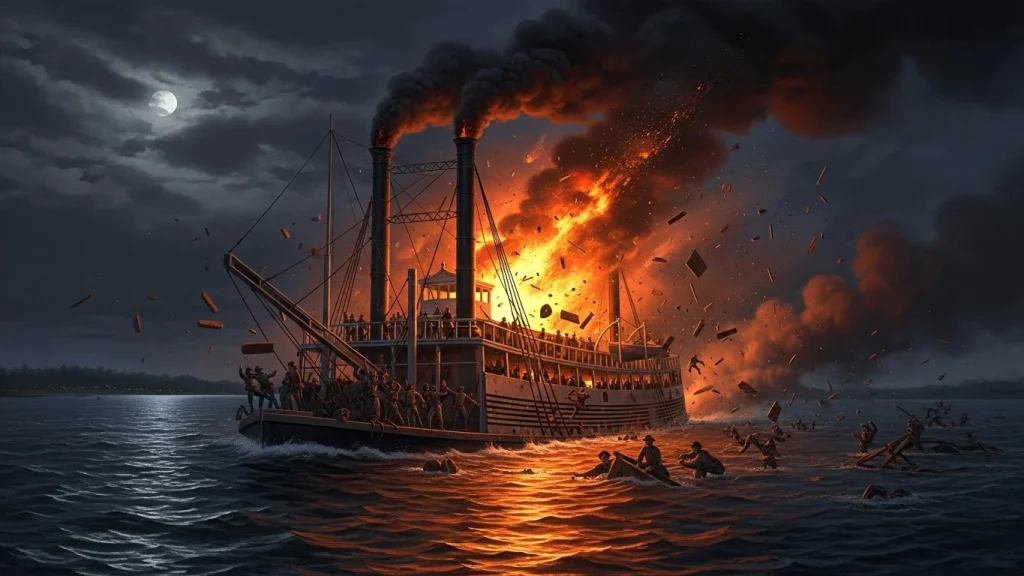
When we think of great American tragedies in April 1865, our minds immediately turn to the assassination of President Abraham Lincoln. Yet, in the shadow of that national mourning, another cataclysmic event unfolded on the dark waters of the Mississippi River one that claimed more lives than the Titanic but has been largely lost to history. This is the story of the Sultana disaster, a catastrophic steamboat explosion that was a final, cruel twist of fate for thousands of Union soldiers who had already survived the horrors of war and the nightmare of Confederate prisons. To understand its full impact, we must navigate the muddy river running of memory, fate, and historical neglect that has defined this event for over 150 years.
The Sultana Disaster: A Perfect Storm of Greed and Fate
By late April 1865, the Civil War was effectively over. The jubilation of Union victory was tempered by the urgent need to repatriate tens of thousands of released prisoners of war from camps like Andersonville and Cahaba. These men were skeletons, ravaged by disease and malnutrition, desperate to return home.
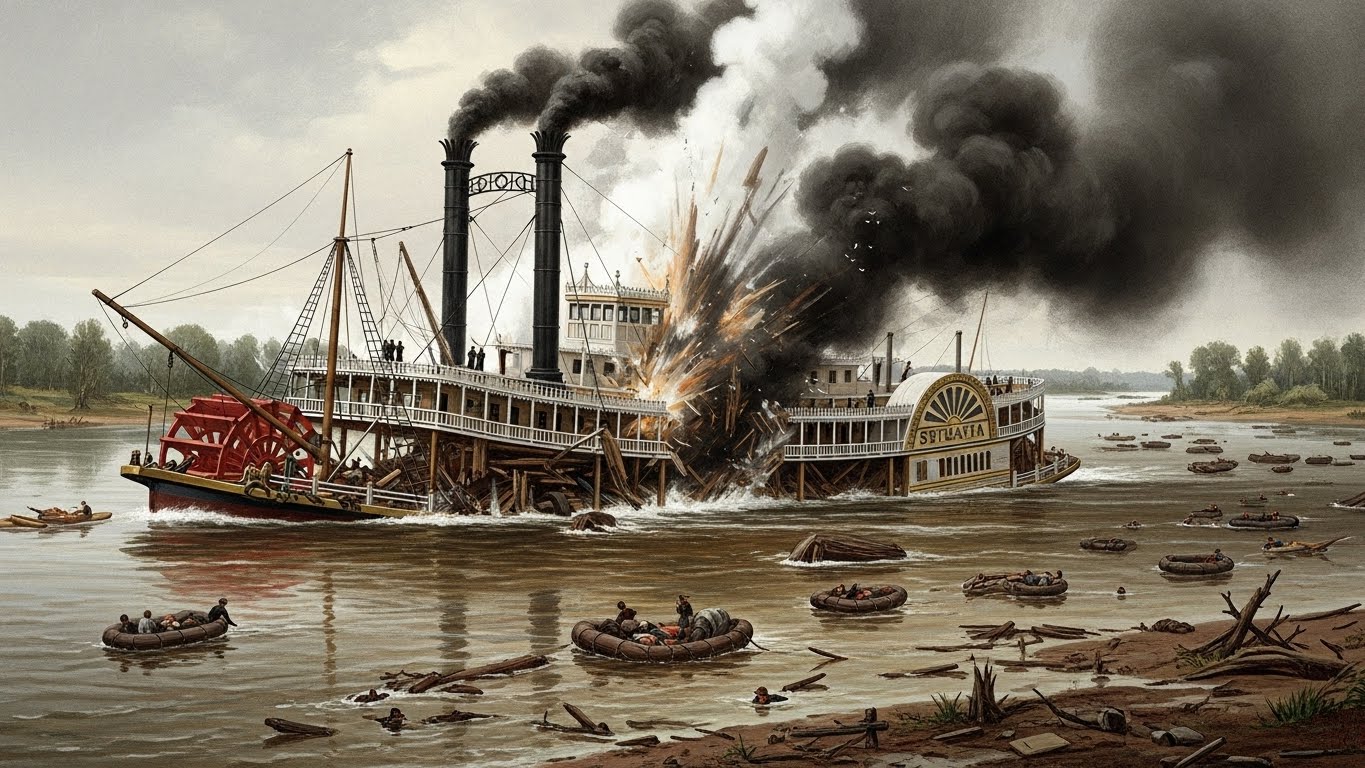
The side-wheel steamboat Sultana, legally certified to carry 376 passengers, was docked in Vicksburg, Mississippi. Through a combination of corrupt army kickbacks and overwhelming pressure to move troops, over 2,300 people were packed onto the vessel. The boat was grotesquely overloaded, its decks sagging under the weight of humanity. To make matters worse, one of the ship’s boilers had been hastily patched just days before.
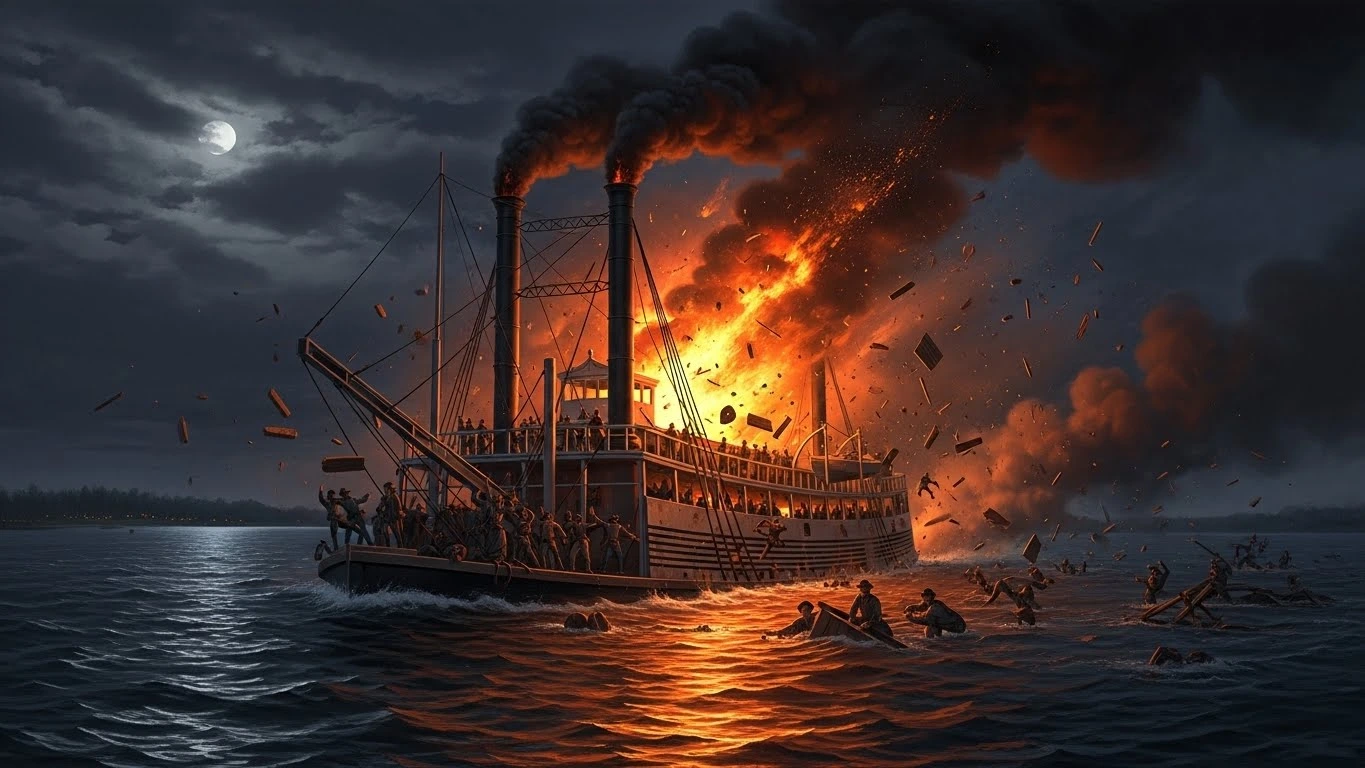
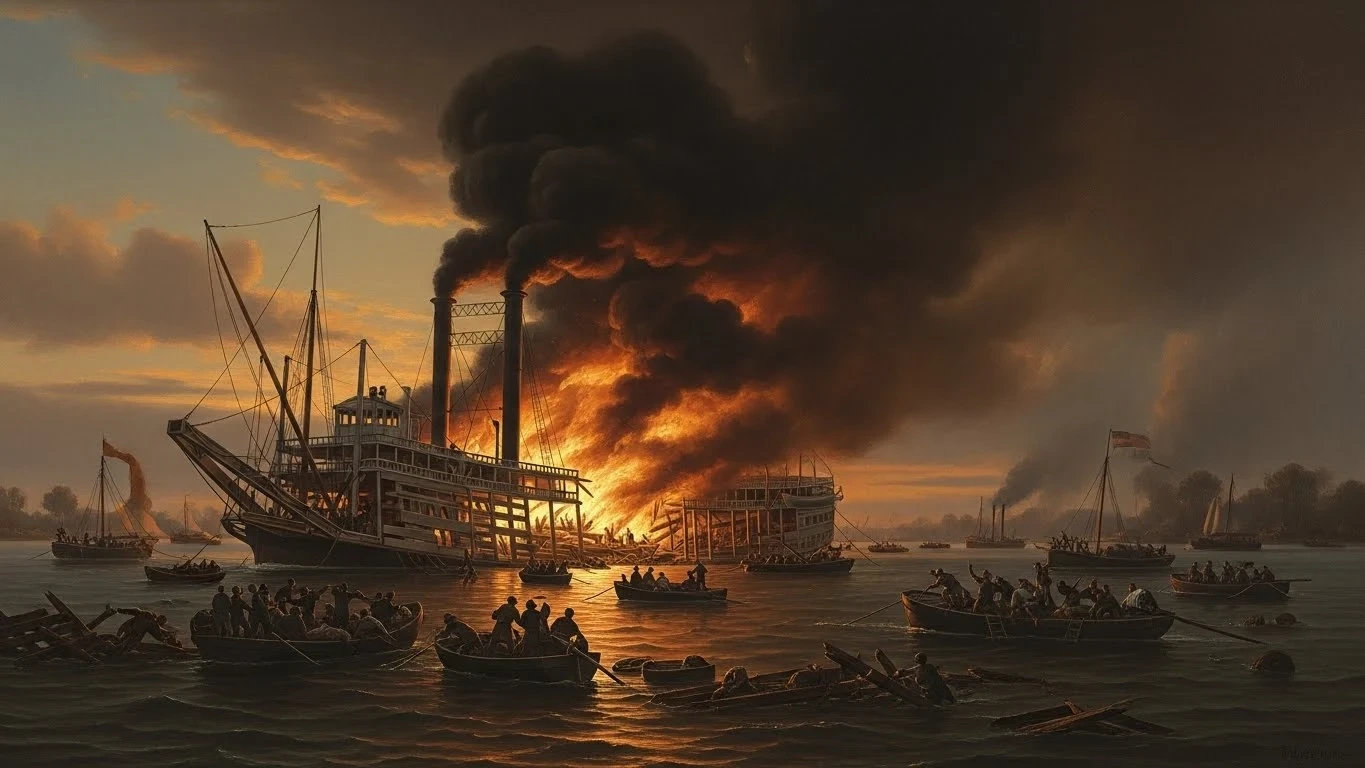
In the early, chilly hours of April 27, 1865, just north of Memphis, the Sultana disaster began. The patched boiler exploded, triggering two others in a chain reaction of steam, scalding water, and shrapnel. The central part of the boat was instantly obliterated. Hundreds were killed in the blast or scalded to death. The ensuing fire turned the wooden superstructure into an inferno, and the panicked survivors faced a harrowing choice: burn or drown in the cold, spring-swollen Mississippi.
The official death toll is estimated at 1,168, though many historians believe it exceeded 1,800. It remains the worst maritime disaster in U.S. history, yet it was a footnote in the newspapers of the day, overshadowed by Lincoln’s funeral procession and the end of the war.
The Muddy River Running: A Metaphor for Memory and Fate
The phrase muddy river running is a powerful metaphor for forces beyond our control. It comes from Margaret Atwood’s poem Half-Hanged Mary, describing an inexorable, murky current of circumstance that sweeps the powerless toward their doom. For the victims of the Sultana disaster, this metaphor is tragically apt on multiple levels.
Literally, they fought for their lives in the muddy river running the cold, turbulent, and debris-filled Mississippi. Figuratively, they were caught in other muddy currents: the current of bureaucratic greed that overloaded the ship; the current of historical timing that buried their story under bigger headlines; and the current of fading memory that has left them as obscure footnotes. Their individual stories their hope, their relief at heading home, their final moments have been muddied by the passing of time, much like the silt that clouds the great river itself. To remember the Sultana disaster is to try to pull these individuals from that murky historical current and grant them the clarity of recognition they deserve.
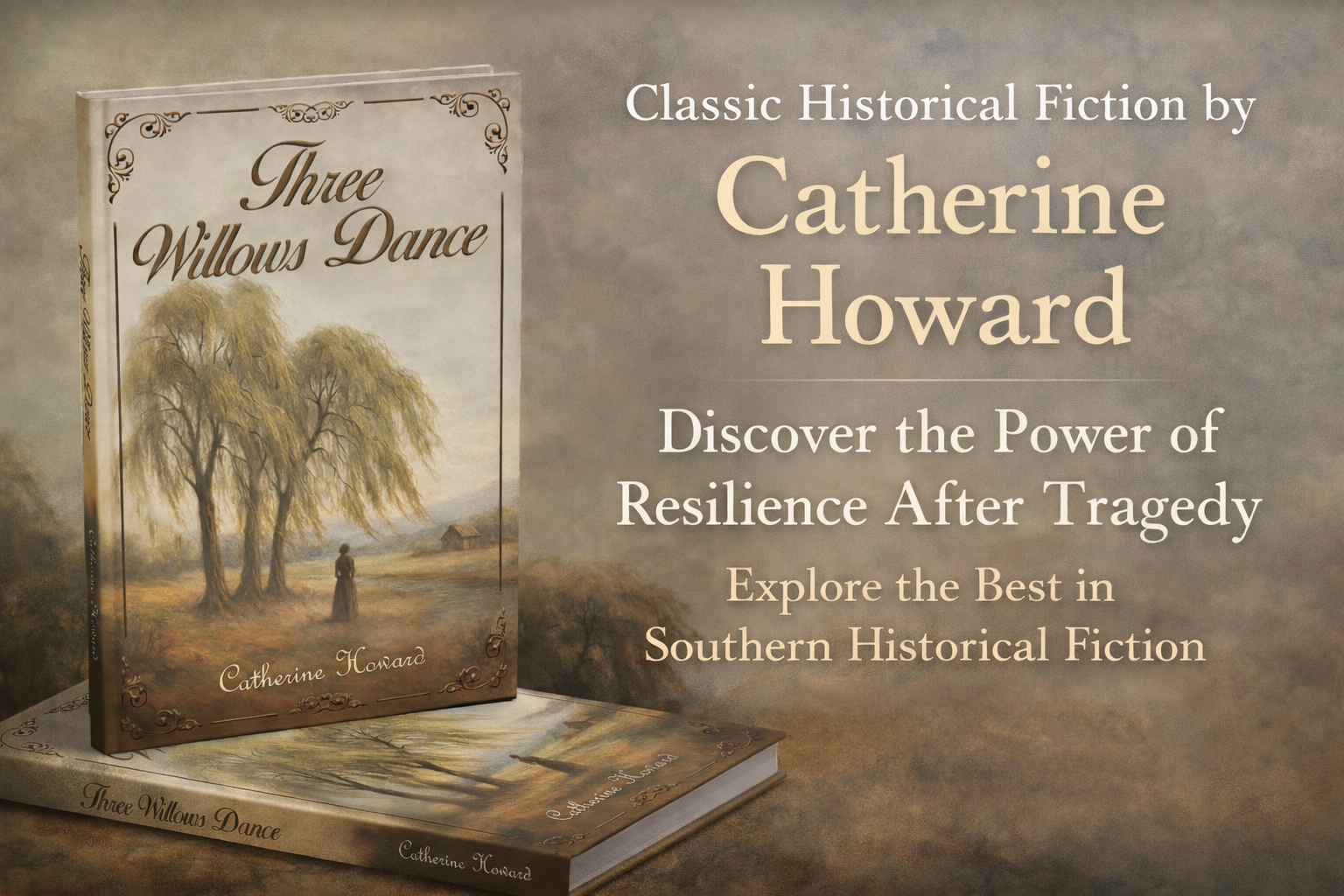
A Surprising Connection: Catherine Howard and the Muddy River
This dual meaning of Catherine Howard perfectly encapsulates the muddy river running of history itself. On one level, there is the literal, tragic event: the cold, turbulent Mississippi that claimed the victims of the Sultana disaster. On another, there is the metaphorical river: the relentless flow of time and forgetting that threatens to swallow individual stories.
Catherine Howard the author intervenes in this current. By writing Muddy River Running, she performs an act of historical and empathetic rescue, pulling the Tudor queen’s perspective from the murky depths of a history written by her victors. Similarly, when we read a detailed account of the Sultana disaster, we do the same for those lost soldiers. We reach into the muddy current of oblivion and pull their stories back into the light.
You should have to also read at least one time a book that performs this vital function. Whether it’s Catherine Howard’s novel Muddy River Running to understand the peril of being a pawn in a Tudor court, or a definitive history of the Sultana disaster to comprehend the costs of corruption and neglect, doing so is an act of remembrance. It reminds us that history is not made of abstract forces, but of individuals caught in their flow. Reading these works builds a levee against the forgetting, allowing us to hear, at last, the echoes of those who were there.
Why the Sultana Disaster Matters Today
Remembering the Sultana disaster is not an exercise in dwelling on gloom. It is a crucial lesson in vigilance. It highlights the catastrophic results of putting profit over safety, of bureaucratic failure, and of ignoring glaring warnings for the sake of convenience. In our own era of crowded ferries, questionable infrastructure, and pressured systems, the story of the Sultana is a stark parable.
Furthermore, it completes our understanding of the Civil War’s human cost. These soldiers survived battle, survived the intentional deprivations of prison camps, and perished on the very threshold of homecoming due to sheer negligence. Their tragedy adds a profound, heartbreaking coda to the war’s narrative.
The muddy river running eventually carries all things toward oblivion. But we have the power to build levees of memory. By sharing the story of the Sultana disaster, by visiting the small memorials in Memphis and Vicksburg, and by connecting it to universal themes of lost voices throughout history from Civil War soldiers to Tudor queens we clear the water. We honor them not as anonymous victims, but as human beings whose final journey on a dark river reminds us of the enduring need for compassion, accountability, and remembrance.
Frequently Asked Questions
What caused the Sultana disaster?
The immediate cause was the catastrophic explosion of three boilers due to extreme pressure and a known, poorly repaired leak. However, the true cause was profound human negligence—the boat was loaded with over 2,300 people, far beyond its legal capacity of 376, a decision driven by greed and corruption. This deadly combination of mechanical failure and exploitative overcrowding led to the tragedy.
Did anyone survive the Sultana?
Of a total of 2,137 souls aboard the Sultana on April 27, 1865, there were 963 survivors and 1,169 deaths, giving the Sultana the ominous distinction of being the worst maritime disaster in American history, to this very day.
Why isn't the Sultana disaster as well-known as the Titanic sinking?
It occurred in April 1865, directly alongside the national trauma of President Lincoln’s assassination and the end of the Civil War, which dominated headlines and public memory. Furthermore, the victims were largely impoverished, sick former prisoners of war, not wealthy celebrities, which shaped contemporary and historical attention. Without a powerful lobby of affluent families to perpetuate its story, it faded into the “muddy river running” of forgotten history.
What is the connection between the Sultana and "muddy river running"?
Literally, survivors fought for their lives in the cold, turbulent, and muddy waters of the Mississippi River. Metaphorically, the phrase represents the powerful, uncontrollable currents of historical neglect, bureaucratic failure, and fate that swept the victims toward their doom and later obscured their story. It’s a lens for understanding how tragedies can be swallowed by the passage of time.